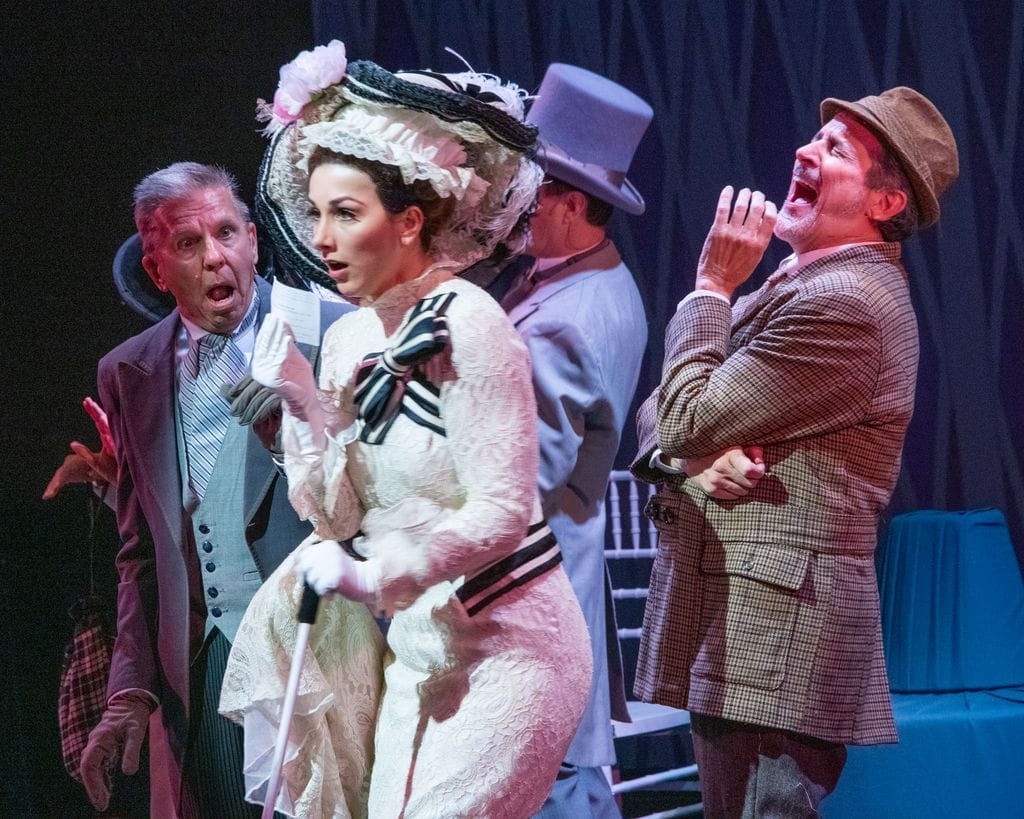
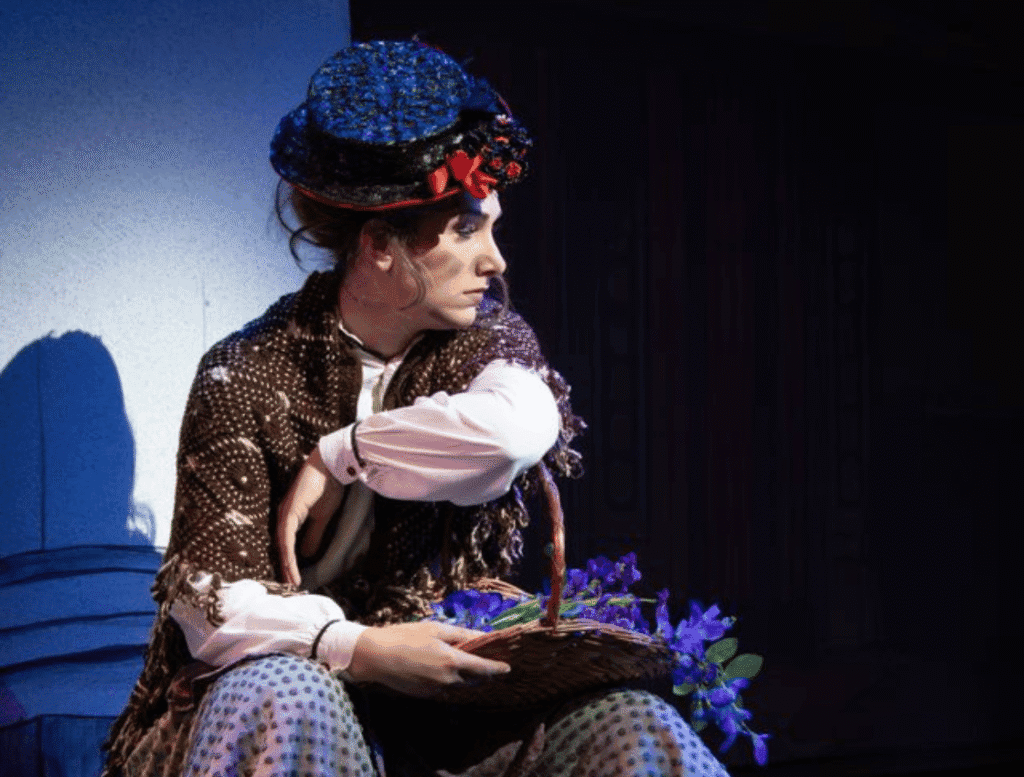
MY FAIR LADY, the iconic Lerner & Lowe musical of the 1950s, was the soundtrack of my childhood. Famous and beloved as the longest running Broadway musical in 1956 (with book & lyrics by Alan Jay Lerner, and music by Frederick Loewe), it won six Tonys, including Best Musical, was turned into an eight-Academy-Award-winning film (including Best Picture) in 1964 and has had a lasting influence on the trajectory of musical theater ever since. Believe it or not, everyone in America and the UK (where it held highly successful tours next) who grew up during the mid-20th century – whether they’d seen the show or not – could likely sing the lyrics to all the songs with glee! When has this ever happened … before or since?
In my house, we didn’t own the record, but we did have a radio, and the songs were always “in the air.” My heavily accented immigrant mom and I would enthusiastically sing the songs as we dusted and “danced” our way around our first little tenement apartment in the Bronx. And we often shared “My Fair Lady” tunes on our hunting expeditions for the cheapest groceries in town.
Later, when I went to school and joined classmates at recess or the playground on weekends, we’d hold talent contests for the best Cockney-accented Eliza Doolittle (“Wouldn’t It Be Loverly,” “Just You Wait”), the best Henry Higgins (“Why Can’t The English,” “I’ve Grown Accustomed To Her Face”) … even the best Alfred Doolittle (“With a Little Bit of Luck,” “Get Me To The Church On Time”) and Freddy Elynsford-Hill (“On The Street Where You Live” and, with Eliza, “Show Me”) song portrayals. We were charmed and inspired by everything about this show.
Founding executive producer Marilynn Wick of The Wick Theatre, where a glorious production of “My Fair Lady” is playing now through February 22, nailed its universal appeal in her program message. “At its heart, ‘My Fair Lady’ is the timeless fairy tale we never stop longing to hear – a story of transformation, perseverance, and the belief that one’s future can be rewritten. It reminds us that determination, discipline, and self-respect can lift a person from unlikely beginnings into a new world.”
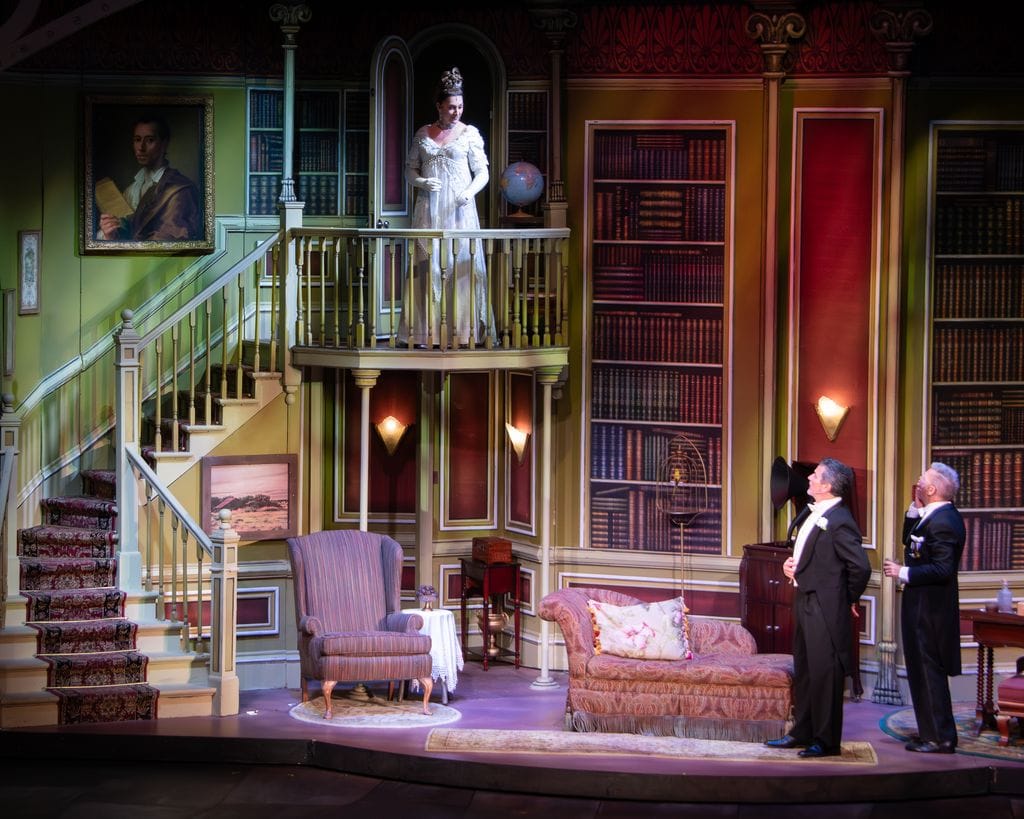
while impressed mentors Michael Coppola, as Henry Higgins, and Charles Baran, as Colonel Pickering, look on. Photo by Amy Pasquantonio.
Norb Joerder, the show’s superb director and a popular Wick favorite (this is his 26th show!) echoes her sentiments, while adding a bit of history and social context. He writes: “My Fair Lady, a musical not a musical comedy (though it has its share of humor) … was adapted from George Bernard Shaw’s classic (1913) play, Pygmalion. It confronted issues of class hierarchy and gender disparity; issues still important today.”
We tend to look toward the past with rose-colored glasses, and maybe the 1964 movie had somewhat softened the harsh edges around phonetics professor Henry Higgins’ incredibly self-centered and obnoxious behavior, both verbally and physically, toward members of London’s lower classes. So be forewarned. Seeing the original musical can be a rude awakening to how far and deep disparities exist in Britain’s class system. And while some aspects of the impoverished Cockney denizens of Covent Garden’s flower district are portrayed sympathetically – as in their camaraderie and shared dreams for a better life – we also see some of them (Eliza’s dad, in particular) pictured as an immoral, selfish drunkard with so little respect for his family, he would sell his own daughter for five pounds. Gist for great comical songs for us to enjoy (i.e. “With a Little Bit of Luck”) but not all that great in the disparaging portrayal of his representative lower class.
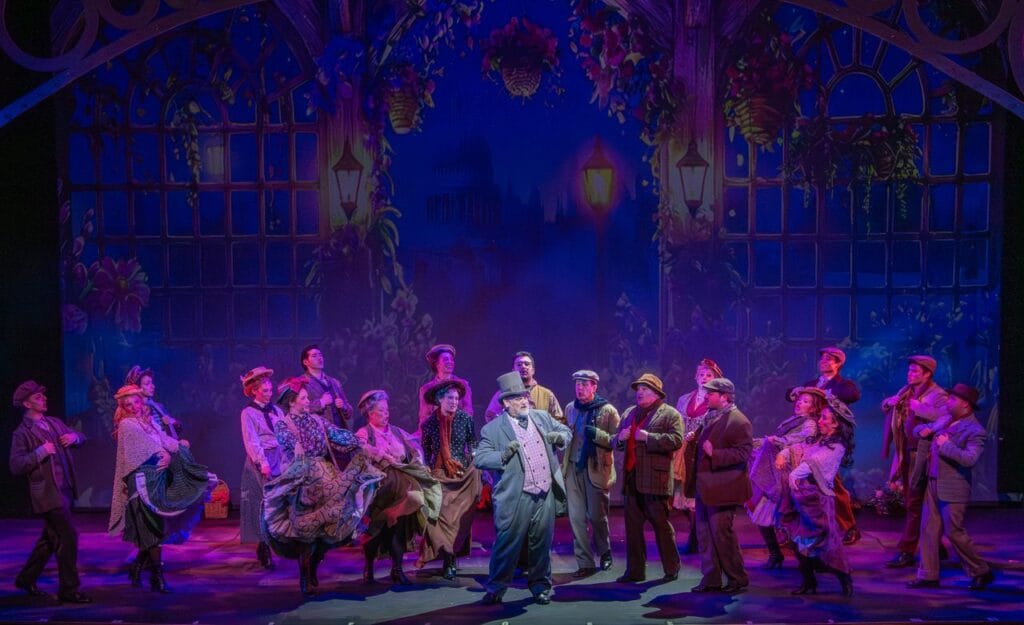
It was rather shocking to see all the raw meanness of class distinction so blatantly portrayed in the musical’s original stage show. But this would also appear to explain why Eliza is so persistent in claiming she’s “a good and honorable girl” to Higgins and anyone who would listen when they first meet. She’s also kind-hearted to her fellow Covent Garden streetside flower sellers and even a soft touch for an extra few pounds to her abusive scoundrel of a dad. Given her mean and horrid upbringing, she deserves extra Brownie points for having turned into a good and moral person, nonetheless. And in a surprising twist of fate, we see even a dedicated ne’er-do-well like Alfred Doolittle eventually succumb to respectability when he unexpectedly inherits a decent income. Making one question whether poverty is often to blame for perceived lack of moral character.
While the Wick featured many of their beloved regulars in this show, almost as if following the show’s theme of uncharted possibility, the two leads were gifted newcomers – fully experienced and talented, but nonetheless new to the Wick. And they were so sensational. At this point I can’t imagine anyone else in the part of Eliza Doolittle than Allyson Rosenblum’s dynamic portrayal – in mannerisms, accent, and incredible vocal range. And Michael Coppola was a spot-on Henry Higgins, in top snide form, but also superior vocals and suave dance moves. My compliments also go to dialect coach Joel Rodriguez. It truly takes a village to put on this classic masterpiece!
Wick regulars outdid them\selves as well. Charles Baran was the ideal, honorable and rather caring Colonel Pickering (though he, too, appeared to neglect Eliza completely in his overt glee at Higgins’ having won the bet to turn her into a “lady” in six months!). I almost didn’t recognize Wick powerhouse Troy Stanley at first, in his white beard, but his voice was as astounding as ever, as he performed what may be his finest comedic role as Alfred P. Doolittle (but I say that each time!) in impressive song and dance.
Brady Ryan Phillips, in another Wick debut, played Freddy for the second time, perfectly, and I couldn’t help rooting for the poor lovestruck lad as he sat swooning for Eliza while singing the patient lover’s anthem, “On The Street Where You Live.” One more Wick regular who fooled me by portraying her new role so completely was Britte Hammeke as chief housekeeper Mrs. Pearce. Her always impressive voice joins “The Servants’ Chorus,” Eliza and two maids in “I Could Have Danced All Night,” and later the gloating Higgins and Pickering in “You Did It.”
Speaking of accomplishments, The Wick certainly “did it” in bringing this iconic musical to life in a way that no other theater could. Of course, they are accomplished masters in classic musicals, but for this one, Kimberly Wick, who oversaw set design and costumes, was also able to access their renowned Costume World holdings of originals and meticulously create new patterns from delicate archival pieces for the current cast.