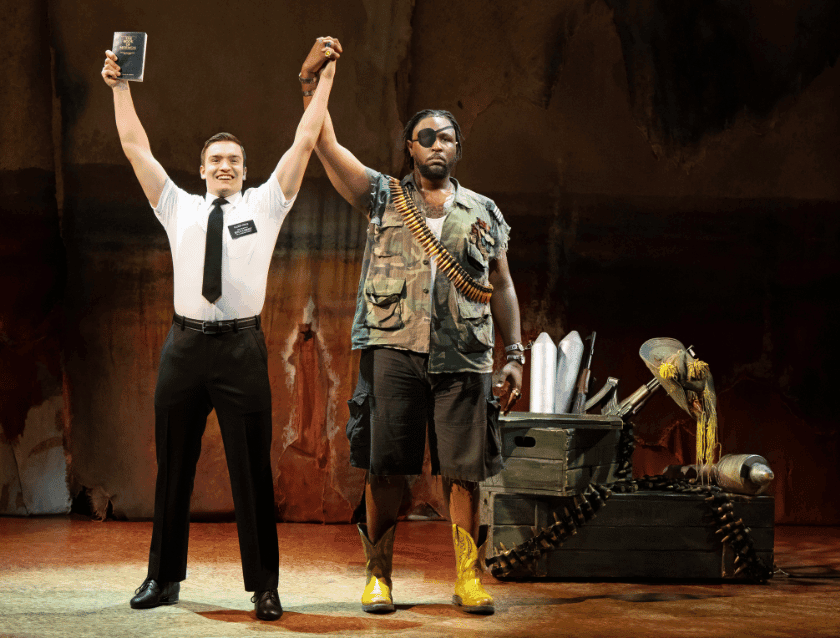
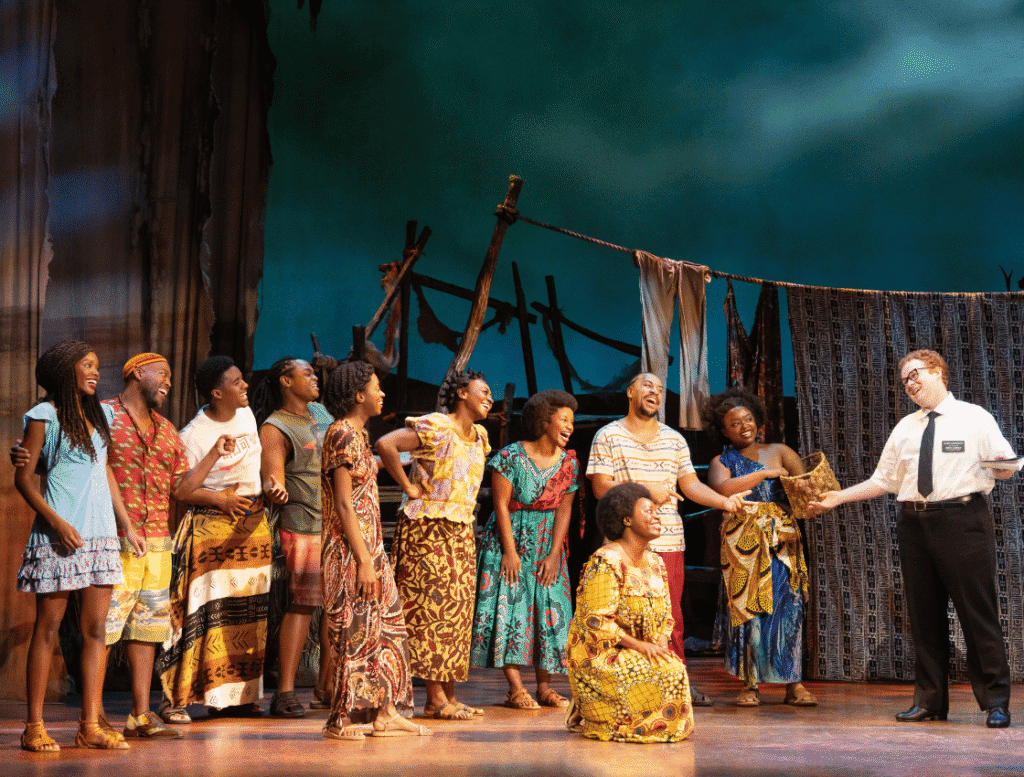
The first musical I ever saw was The Book of Mormon. A little over a decade ago, my best friend Salman and I secured student-priced, nosebleed tickets to see this crass, new show from the creators of South Park. We were high up in the Altria Theatre in Richmond, Virginia, so far from the stage that it was sometimes difficult to make out the finer points of the plot. But I remember crying from laughing so hard. I remember, very clearly, feeling that I had found love for something I hadn’t before: love for theatre.
Because Sam is no longer with us, The Book of Mormon will always carry a special charge for me. It is a show built on jokes and profanity. But for me, beneath all of that, it is also tied to memory, friendship, and the strange ways art becomes personal, becomes ours. Returning to it now, at the Adrienne Arsht Center in Miami, in June 2026, directed and choreographed by Jennifer Werner, I saw the plot from the orchestra instead of the rafters. What had once registered to me mostly as comedic slapstick now revealed itself as a surprisingly precise machine. The pacing was sharper and quicker than I remembered, with jokes landing in rapid succession and the cast rarely allowing the audience to catch its breath before the next punchline arrived. The Book of Mormon has always depended on speed, on its ability to move so quickly that the audience is still laughing at one thing when the next thing sneaks up behind it. This production understood that rhythm beautifully.
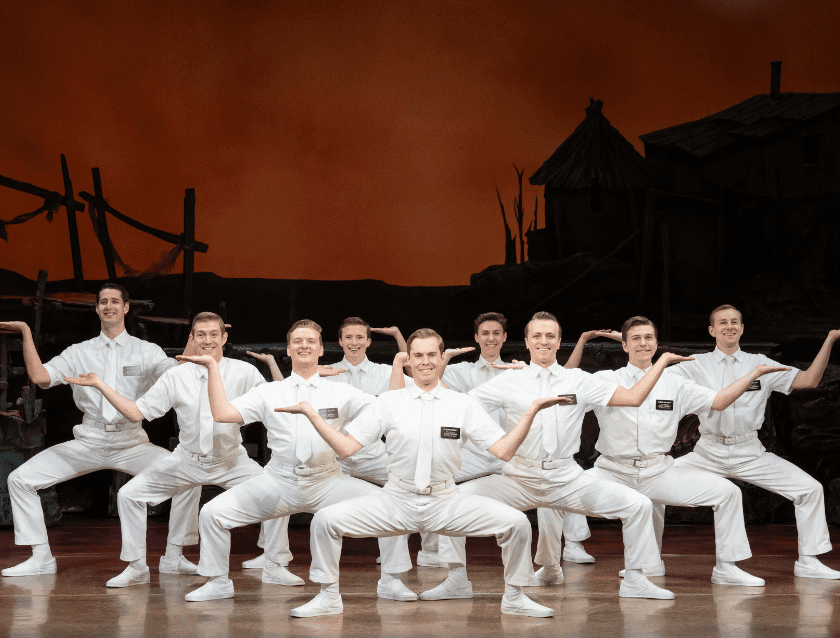
The show’s humor remains as blunt and offensive as ever. It is not a musical interested in subtlety, nor does it pretend to be. It is not for everyone. But what makes The Book of Mormon endure is the way that shock is paired with classic musical theater craft. The score is bright, catchy, and often deceptively traditional; like the Roger & Hammerstein-vibe they intended. The contrast is the joke, but it is also the pleasure. The production at the Arsht Center leaned fully into that tension, giving the audience a show that felt both outrageous and controlled.
The lead performances were uniformly strong. Ethan Davenport brought a great blend of confidence and innocence to Elder Price, capturing a young man whose certainty fractured the moment life didn’t follow the script he had been told. Jacob Aune was especially memorable as Elder Cunningham, never failing to land a line, finding that perfect balance between desperation and sweetness. Cunningham can easily become a one-note clown, but here Aune made him feel human, a lonely person whose lying behavior comes from a very real need to be loved. Charity Arianna gave Nabulungi warmth and an openhearted presence that helped ground the show whenever its satire threatened to spin off into something more sinister. So many other crew members executed to their highest with this one: Shafiq Hicks as the General; Jay Martin as the Doctor; and Jarius Miquel Cliett as Mafala, etc.