
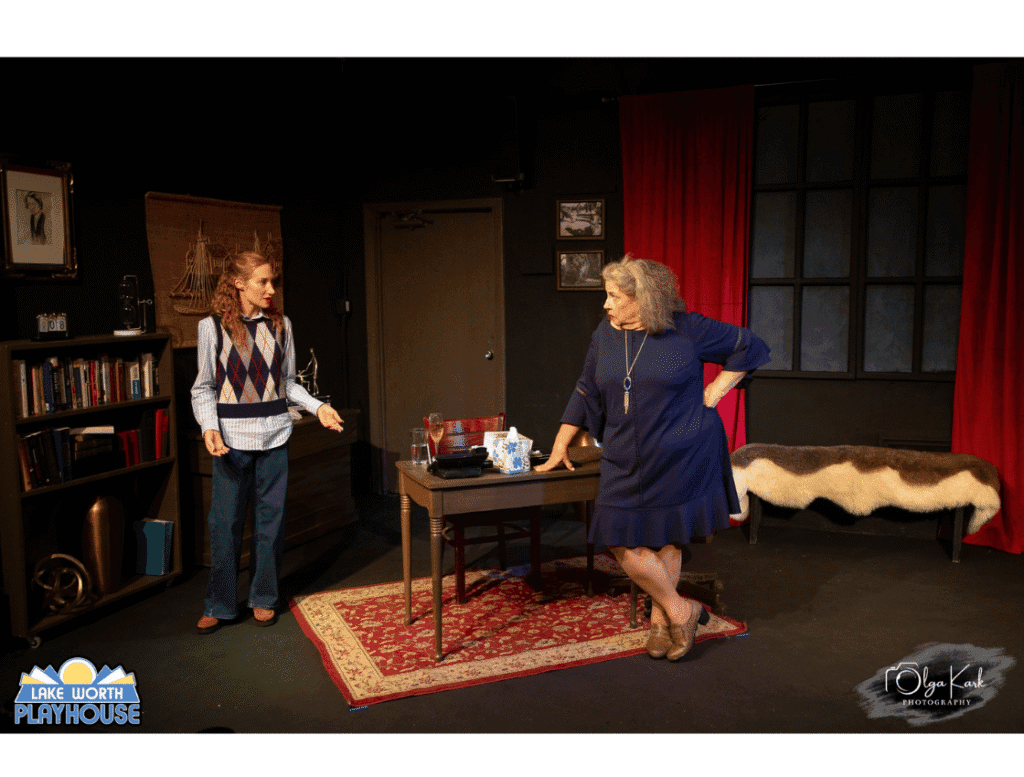
The title of Sarah Treem’s The How and the Why comes from the idea, eventually articulated by one of its characters, that every scientific phenomenon is explainable from both perspectives. And though much of the piece revolves around the two main characters’ careers as evolutionary biologists, the most engaging “how” and “why” questions the script poses have less to do with their competing theories than with the unexpected evolution of the complex relationship between them.
As we learn not long into the play’s first act—and as attentive viewers may well suspect even earlier—that relationship is initially rooted less in shared history than shared biology. 28 years before The How and The Why takes place, Zelda Kahn chooses to give up her infant daughter for adoption, and then goes on to publish a striking hypothesis that she parlays into an enviable career in academia.
When 28 year old Rachel Hardeman, now a promising grad student in the same field in which Kahn made revolutionary contributions, arrives for a meeting with this esteemed elder, she isn’t just hoping for mentorship; she’s also Kahn’s long-lost daughter, and hungry for answers about how and why she came to be.
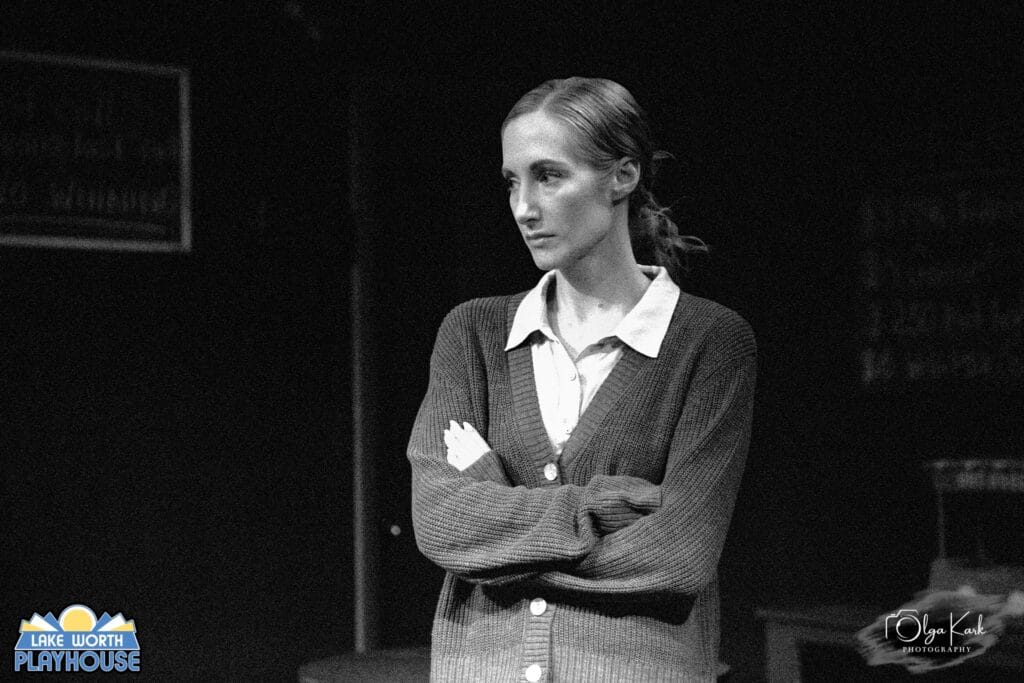
This reveal is only the first of many that propel the plot of this thematically rich two-hander, which easily maintained my interest for the entire evening. I appreciated that I was basically never bored by the piece even when it was formulaic enough for me to see the next few twists coming- something that makes sense given playwright Treem is better known by most as a television writer who worked on hits like House of Cards and The Affair.
Treem’s Hollywood roots might also be behind the play’s occasional forays into melodrama, which seemed at odds with its otherwise grounded tone.
Overall, though, these minor craft issues do little to dull the impact of the play’s otherwise elegant construction. I was particularly impressed by how seamlessly Treem was able to weave the characters’ scientific theories into the play’s emotional architecture. Subjects as supposedly dry as the biological origin of menstruation and menopause here become fodder for electrifying debates charged by the characters’ differing perspectives on sexual politics, childbearing, and what it means to be a woman at all.
Though I hesitate to reduce this play to how it fares as feminism, I was particularly struck by the way that Zelda’s decision to devote herself to her work even at the expense of her personal life was portrayed as a noble sacrifice she does not regret making. In one memorable passage, she describes that work:
“It will lift you and it will hold you ten feet above whatever tempest demands. It is your life vest, it is your therapy, it is your fountain of fucking youth.”
It’s refreshing to see a female character “allowed” to express this kind of attitude so unashamedly, to be celebrated for choosing the pursuit of truth over marriage and parenthood.
In Rachel and Zelda, Treem creates two fiercely passionate female characters whose vulnerabilities only make them more compelling. And in the Lake Worth Playhouse’s strong production, actresses Meg West (Rachel) and Betsy Bittar (Zelda Kahn) do a commendable job of bringing them to vivid life.