
Brevo Theater’s production of The Color Purple

Very few theater critics have a clue about the quality of the show they are going to see when they walk into the performance venue. My wife and I walked in to see Brevo Theater’s production of The Color Purple at the Pompano Beach Cultural Center and it far exceeded our expectations. It was stunning! Only seven performances remain of this glorious production, so, if you are a theater aficionado you need to experience this show. It does not disappoint.
There are three young men who deserve recognition for this outstanding production. Zaylin Yates (Founding Director), Terence Pride (Artistic Director) and Bryan Keyth-Wilson (Show Director) are talented men with heart and vision. Don’t forget their names because they are up and comers. If they are not dominating the South Florida theater scene in the next few years, it will be because they will be accepting Tony Awards in New York City.

 The production also faced an unimaginable challenge. After months of preparation, a lead cast member unexpectedly passed away shortly before opening night. In tribute to her memory, the cast and creative team chose to move forward with the production, leaving them just one week to regroup and prepare. Considering those extraordinary circumstances, what they accomplished onstage is all the more remarkable.

No one expected Steven Spielberg’s 1985 movie, The Color Purple, (with such prominent stars as Whoopie Goldberg, Oprah Winfrey, Danny Glover and Lawrence Fishburn) to ever be turned into a musical. Yet with passion, vision and determination, anything can happen.

It started with Alice Walker’s 1982 Pulitzer Prize winning novel, The Color Purple. The book tells the story of Celie’s 40-year journey in rural Georgia. From a timid, meek, abused daughter and wife to a woman of triumph and independence, Celie truly grows into herself as a kind, caring and strong person. Despite its raw truth and grittiness about life in the rural south, several schools have banned this book for controversial yet timely themes like domestic violence, incest and sexual innuendo. Brevo Theater did an outstanding job of broaching these topics without actually depicting them on stage.

The amazing creative team of Pulitzer Prize-winning playwright Marsha Norman (she adapted the script for the stage), with music and lyrics by Stephen Bray, Allee Willis and Brenda Russell, showcases outstanding collaboration. The Color Purple is a Broadway musical highlighting jazz, gospel and blues in ways that delight the ear. The live show opened in 2006 and, much like the Spielberg film and the Oscars, earned 11 Tony nominations.

There are two very contrasting views of why the show is titled The Color Purple. The most obvious is Celie’s purple-colored bruises first from her father and then from her husband. The second refers to the everyday beauty of the world, divine presence, and a woman’s journey to self-love and liberation. The flamboyant Shug Avery tells Celie, “It pisses G-d off to walk past the simple, striking beauties of nature like a field of purple flowers without taking the time to truly notice and appreciate them.”

The play itself is an emotional roller coaster ride with many emotional highs and lows throughout.  Celie writes letters to G-d about her stepfather’s abuse. The only saving grace is the bond she has with her real sister, Nettie. Mister, an abusive farmer, wants the younger Nettie to be his wife but the stepfather gives Celie to him instead, with the promise of a cow to sweeten the deal. Sealed with a handshake, Celie leaves for a life filled with harshness and servitude. Mister still desires the young Nettie but Celie intervenes and sends Nettie away.  Her life is bleak but she continues to persevere. Sophia, Mister’s son’s girlfriend, plants the seed of “hell, no!” regarding the abuse Celie is enduring. Then, the formidable Shug Avery, further fortifies Celie’s resolve. Shug oozes sensuality but she is smart and gets what she wants. She knows how to manipulate men, definitely a sign of independence, especially during that era.

The second half finds Nettie as a missionary in Africa. She writes letters to Celie every day. Mister hides them from her as a way to exert his power. Celie and Shug share a deep and growing friendship leading to their own sexual bond (mostly offstage). Sophia, now Harpo’s wife, continues to school Celie about standing up to men in the women-empowering laugh out loud musical number. Celie, with Shug’s help, discovers the hidden letters from Nettie. Shug advises Celie to move out of Mister’s house and join her in Memphis. Upon inheriting the Georgia farm from her dead step-father, Celie starts her own successful pants factory. The circle is successfully completed when Nettie returns from Africa with Celie’s two children.

The Color Purple is filled with universal themes like faith, determination, love and overcoming insurmountable barriers, each one relatable to our own lives. Whether experienced in 1909 rural Georgia or in 2026 Pompano, Florida, everyone faces adversities to overcome and discovers solutions to make that happen.

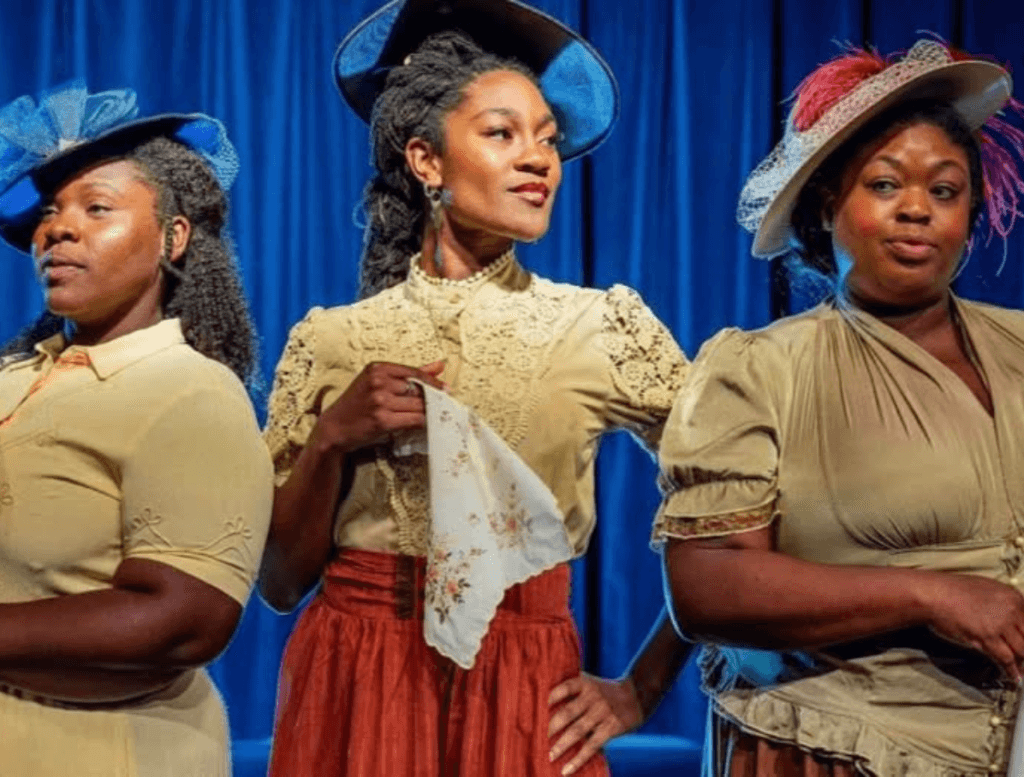
Bryan Keyth-Wilson assembled a perfect cast. Each cast member possesses a strong voice and acting prowess. The four female leads, Brooklynn Miller (Celie), Aria Hope (Shug), Ashley Nicole Portis (Sophia) and Cassidy Joseph (Nettie), had such powerful voices that each could raise the roof off the Cultural Center by themselves. They all portrayed their characters with passion, integrity and abandonment. The Church Ladies, sung by Krysten Blaire, Samara Baptist and Lashondra Hood, had amazing voices and brought a comedic moral sense of duty, as all good church ladies should. The men’s ensemble was also remarkable. Standouts were Michael Wallace and Jamaine Benjamin Jr. Michael played Mister, a difficult role, with strength and evil determination, until Celie’s new-found independence led him to introspection and a new resolve. Jamaine added comic relief and a strong voice, along with on-point visual expression and physical mannerisms, as Harpo.

A show of this nature can never be successful without the designers and crew.

Damien Sanchez’s band was amazing, especially considering the length and breadth of difficult music. Lauren Kennedi Ozie Dixon’s lighting was well done. There were one or two moments where area coverage was slightly mis-directed, but it still worked. Harlen Penn did a good job with set design considering the venue. Set changes by crew and actors are difficult timing-wise and require countless hours of practice and, overall, a job well done. Costumes were perfect for the time and period of the piece. It was obvious how hard the crew and stage manager worked during the performance. David Hart, sound designer, had some mic issues but that seems normal for this venue and were quickly resolved.

Every member of this cast should walk away with pride and satisfaction. They drew the audience in and never let them go until the final curtain call. Bravo, Brevo Theater! The show closes on July 3 at 7:30 pm. RUN, don’t walk, to go see it!

You may also like