

Buena Vista Social Club makes me acutely aware of how we can communicate beyond words. As a music lover, I was transfixed by the cast performing at the Adrienne Arsht Center, their sense that melody carries life. The touring Broadway musical that played in Miami through October 4th, gives this production a particular resonance. Cuba is close enough to feel almost within reach, yet the distance between the island and this city has been complicated by generations of displacement. There is a regional romance in hearing this music here, where Cuba is woven into so many family histories.
With a book by Marco Ramirez and direction by Saheem Ali, the musical moves between Havana in 1956 and 1996. The later timeline follows the gathering of veteran musicians for the recording that would bring their music to international attention. The earlier one returns us to a country approaching upheaval. Omara Portuondo becomes a central figure at the intersection of these two timelines. My favorite element of the staging was the way time flowed in and out. The production allows the two timelines to occupy the stage together, making memory visible through the presence of younger and older selves simultaneously. The effect is suited to a story about returning to music after decades have passed.
For me, this fluidity also gives the musical a form of reclamation. Revolution and dictatorship altered the course of these lives, and those overlapping figures suggest how much survives beyond the public record. Art can remain inseparable from a country’s political history. The musicians regain an opportunity to tell us who they are through their sound.
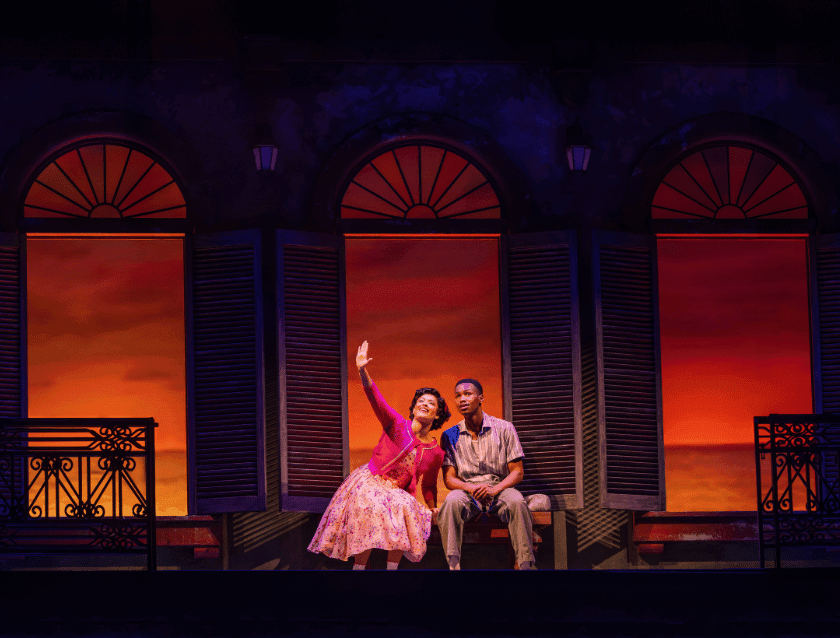
The performers deserve overflowing praise. Karmine Alers as Omara, and Isabel Gonzalez as her younger self, give the production its emotional center, while Jaleel Battles, Jr., as Ibrahim especially contributes to its vitality; those voices spill from their lips. Across the company, the commitment to the music is palpable. There is pleasure in watching performers give themselves so completely to material they clearly cherish.